
 Cardiology
 Paediatrics
 Neurology
 Orthopaedics
 Family
Physician
Family
Physician
 Gynecology
 Endocrinology
 Gastrology
 ENT
ENT
 Pulmonology
 Cancer Care
 Radiology


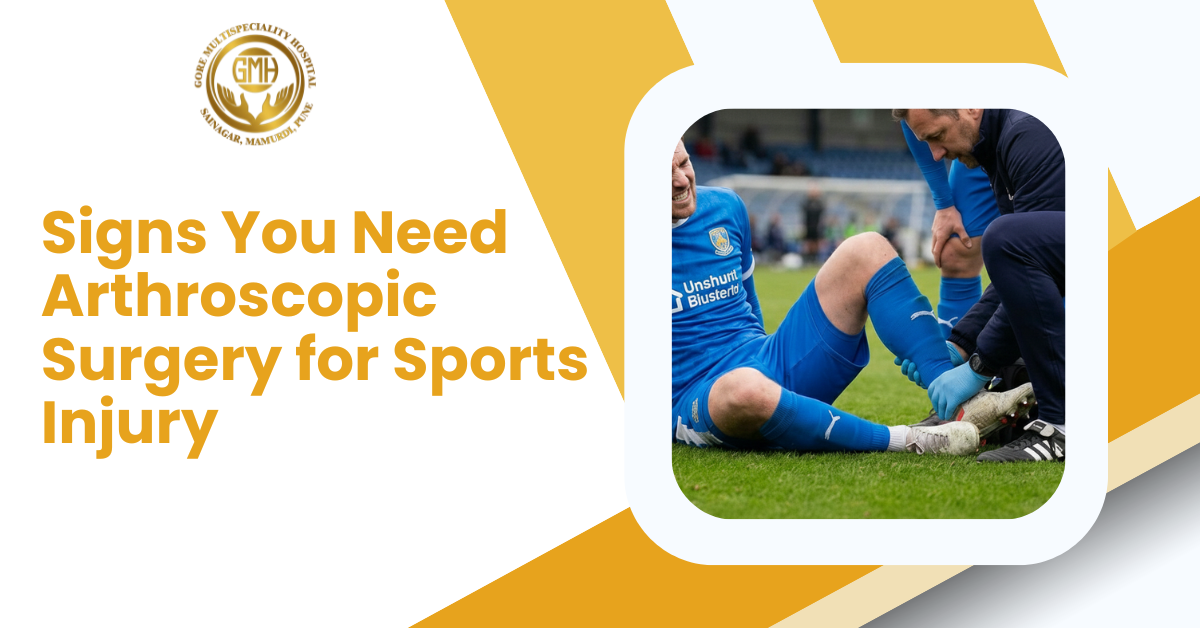
Sports injuries are a part of every athlete’s journey, whether you’re a weekend runner, a gym enthusiast, or a professional player. Most minor sprains and strains heal with time, but some injuries are far more serious than they appear. Ignoring them or delaying proper treatment can lead to long-term complications, chronic pain, and reduced performance.
At Gore Hospital, we often meet patients who say, “I thought it would get better on its own,” only to discover that the injury needed medical attention weeks earlier. This article will help you understand the warning signs that indicate your sports injury may require arthroscopic surgery and why acting early makes all the difference.
What Is Arthroscopic Surgery?
Arthroscopic surgery is a minimally invasive procedure used to diagnose and treat joint problems. Surgeons make tiny incisions and insert a small camera (arthroscope) to look inside your joint. This allows them to repair damaged tissues like ligaments, cartilage, or the meniscus with precision.
It’s commonly done for:
- Knee injuries
- Shoulder dislocations or labral tears
- Cartilage damage
- Meniscus tears
- Ankle and hip injuries
Athletes prefer arthroscopy because it leads to faster recovery, less pain, and minimal scarring compared to open surgery.
Common Sports Injuries That Often Need Arthroscopy
Not every injury needs surgery, but certain conditions respond better when repaired arthroscopically, such as:
- ACL or ligament tears
- Meniscus tears
- Labral tears (shoulder and hip)
- Severe cartilage damage
- Recurrent joint instability
These injuries often occur due to sudden twists, falls, collisions, or repetitive strain — all common in sports like football, basketball, cricket, tennis, and running.
Signs Your Sports Injury Needs Arthroscopic Surgery Immediately
1. Persistent Pain That Doesn’t Improve
If your pain hasn’t improved even after 2–3 weeks of rest, icing, and physiotherapy, it could indicate deeper structural damage inside the joint. Persistent pain often signals torn ligaments, cartilage injury, or a meniscus tear that won’t heal on its own. When pain becomes constant or interferes with daily activities, arthroscopic evaluation becomes important.
2. Joint Locking or Catching
A joint that suddenly locks, catches, or feels stuck usually means something is mechanically blocking movement. This often happens due to a torn meniscus, loose cartilage fragments, or a labral tear. Locking is a serious warning sign because it means internal tissues are displaced. In such cases, arthroscopic surgery is often needed to restore smooth joint movement.
3. Feeling of Joint Instability or “Giving Way”
If your knee or shoulder feels unstable, slips out of place, or gives way during movement, it may indicate a ligament tear or severe joint laxity. Instability increases your risk of falling and worsening the injury. Since unstable joints rarely correct themselves without repair, arthroscopy helps restore strength, alignment, and long-term stability.
4. Reduced or Painful Range of Motion
Difficulty bending, stretching, rotating, or lifting the joint suggests something inside is restricting movement. This could be swelling, cartilage damage, or torn tissues limiting mobility. When range of motion declines despite rest or treatment, it may indicate internal damage that needs a closer look. Arthroscopy helps identify and repair the exact problem.
5. Recurrent Swelling After Activity
If swelling keeps returning every time you exercise or even perform basic movements, it’s a sign of ongoing inflammation inside the joint. Conditions like meniscus tears, ligament injuries, or cartilage wear often cause repeated swelling. Persistent fluid buildup indicates the injury isn’t healing naturally and may need arthroscopic intervention to prevent long-term joint damage.
6. Painful Clicking, Grinding, or Popping Sounds
Occasional popping can be harmless, but frequent or painful clicking and grinding noises often mean internal structures are rubbing or catching. This usually happens due to torn cartilage, loose fragments, or worn joint surfaces. When sounds come with discomfort, stiffness, or swelling, arthroscopy may be required to remove or repair the damaged tissues.
7. Numbness or Tingling Around the Joint
Tingling, numbness, or weakness around the injured area can indicate nerve involvement from swelling or internal compression. This is more serious than normal soreness and should never be ignored. Arthroscopy may be needed to relieve pressure, repair internal damage, and prevent long-term nerve irritation that could affect your mobility and strength.
8. No Improvement After 4–6 Weeks of Physiotherapy
If you’ve followed your physiotherapy program consistently but still feel pain, stiffness, or instability, the injury may be more severe than expected. Failed conservative treatment often indicates structural damage that requires direct repair. Arthroscopic surgery helps address hidden issues that exercises alone cannot fix, helping you recover faster and return to your normal activities.
When You Shouldn’t Delay Arthroscopic Surgery
Some injuries worsen rapidly if not treated on time:
- ACL tears causing knee instability
- Shoulder dislocations with labral damage
- Locked knee from severe meniscus tears
- Meniscus root tears causing rapid cartilage loss
Delaying treatment can lead to:
- Chronic joint instability
- Early-stage arthritis
- Reduced athletic performance
- Permanent cartilage damage
- Long-term pain
Timely arthroscopy prevents complications and helps restore normal joint function.
Arthroscopy vs. Conservative Treatment: What’s Right for You?
When you’re dealing with a sports injury, one of the biggest decisions you’ll face is choosing between conservative treatment (like rest, physiotherapy, bracing, and medication) and arthroscopic surgery. Both approaches have their place — but the right choice depends entirely on your injury type, symptoms, activity level, and healing goals.
Let’s break it down in a way that’s simple, practical, and athlete-friendly.
When Conservative Treatment Is the Better Option
Conservative treatment focuses on supporting your body’s natural healing process. It works extremely well for many mild-to-moderate injuries
When Conservative Treatment May Be Right for You
- Your pain improves within 7–10 days
- You can move the joint without sharp pain
- The injury is a mild muscle strain or ligament sprain
- There is no instability (the joint doesn’t give way)
- Swelling reduces consistently
- You can walk, run lightly, or lift without the joint “catching”
- Physiotherapy helps you regain strength and mobility
Common Injuries Treated Conservatively
- Grade 1 or mild Grade 2 sprains
- Tendinitis or tendinopathy
- Mild rotator cuff strains
- Runner’s knee (early stages)
- Minor cartilage inflammation
- Initial stages of overuse injuries
What Conservative Treatment Includes
- Rest and activity modification
- Ice, compression, and elevation (R.I.C.E)
- Anti-inflammatory medications
- Physiotherapy and stretching
- Strengthening programs
- Ultrasound or TENS therapy
- Bracing or taping for support
Conservative care is usually the first line of treatment, and many patients recover successfully with consistent rehab.
When Arthroscopic Surgery Is the Better Option
While conservative treatment works for many injuries, some conditions simply cannot heal without surgical repair. These typically involve internal structural damage inside the joint.
When Arthroscopy May Be Right for You
- Your pain lasts more than 4–6 weeks despite physiotherapy
- Your knee or shoulder keeps locking, catching, or clicking
- You experience joint instability (such as the knee giving way)
- Swelling returns every few days
- You have a suspected ligament or meniscus tear
MRI Findings That May Require Arthroscopy
- ACL or other ligament tear
- Meniscus tear
- Labral tear
- Cartilage flap injury
- Loose body inside the joint
Impact on Daily Life and Performance
- Your injury affects daily movement or sports performance
- Pain worsens with activity and does not improve with rest
Conditions Where Arthroscopy Is Especially Beneficial
- Persistent meniscus tears
- ACL injuries causing joint instability
- Shoulder dislocations with labral damage
- Hip or shoulder labral tears
- Cartilage defects
- Loose bone or cartilage fragments inside the joint
- Severe impingement syndromes
Unlike open surgery, arthroscopy uses tiny incisions, causing less pain and allowing faster recovery — making it ideal for athletes and active individuals.
Comparing Both Treatments: A Quick Breakdown
| Factor | Conservative Treatment | Arthroscopic Surgery |
|---|---|---|
| Pain Relief | Gradual | Immediate (post-repair) |
| Recovery Time | Slower for deeper injuries | Faster for structural issues |
| Best For | Mild injuries | Tears, instability, mechanical symptoms |
| Complications | Minimal | Low (minimally invasive) |
| Return to Sports | Depends on natural healing | More predictable timeline |
| Addresses Root Cause | Sometimes | Yes — repairs damage directly |
What Happens During Arthroscopy?
Most patients feel relaxed once they understand the process:
Before Surgery
- MRI and physical evaluation
- Routine blood tests
- Discussion about anesthesia
During Surgery
- Small incisions are made
- A camera is inserted into the joint
- Damaged tissue is repaired or removed
- The procedure usually lasts 30–90 minutes
After Surgery
- You can go home the same day
- Pain is manageable with medication
- Physiotherapy starts within a few days
Final Thoughts
Sports injuries are unavoidable, but long-term damage is not. When you listen to your body and act on early warning signs, you reduce the risk of major complications. Persistent pain, swelling, or instability often means something deeper is going on.
If symptoms continue, don’t delay. Consult an orthopedic or sports injury specialist at Gore Hospital for timely evaluation and expert care.
Your joints deserve attention. The sooner you act, the better your chances of returning to sport and daily life with confidence. Take the first step toward recovery — book your consultation at Gore Hospital today.
Need Expert Guidance?
Our gynecology specialists are here to help. Book an appointment today for personalized care and treatment.
Book Appointment